Two questionable elections Dec. 2 reached opposite conclusions. Vladimir Putin claimed to no great surprise that a
rigged electoral process had
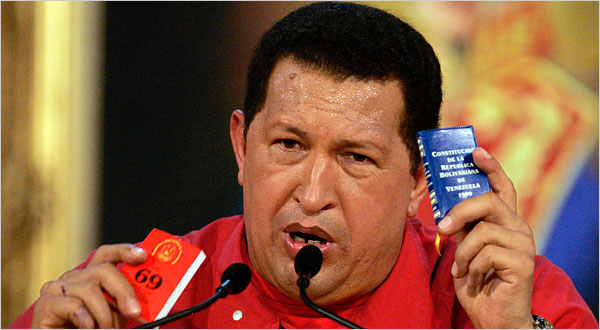
given him a "mandate" to do whatever the hell he wanted. Meanwhile, after losing a narrow squeaker on changing the constitution, Hugo Chavez of Venezuela did not blame the CIA and cancel the results, but
accepted them with dignity. For now at least.
Is it fair to even lump these two events together? Yes, because of the process of mobilizing the grass roots. Putin's Russia remains capitalist, but he's been convinced for some time that the Russian people have a soft spot for authoritarianism and the personality cult - witness
Stalin's continued popularity. Why waste time with messy democracy when Putin gets
adorned on T-shirts whenever he cracks heads? The results say as much about Russian people not being very appreciative of democracy or multiculturalism (witness the crackdown on gays and foreigners) as it does about Putin's
siloviki friends from the KGB and FSB.
Chavez knows he can mobilize similar forces, since the urban poor he relies on would rather be
whipped up into violence than follow the nonviolent
land-seizure methods of Bolivia and other Latin American countries. (It was funny to see some left-bloggers who were so anxious to see a Chavez victory, they gave us some
"Dewey Defeats Truman" headlines Sunday night.) My gripe with Hugo all along has not been his Bolivarian economic models, but his demagogic tendencies and his intention to whip up violence. Maybe his response to his electoral loss indicates he's realizing the price he pays for being a provocative loudmouth. The first test will be to see if he can restrain Chavistas seeking revenge. The second test will be whether he avoids the temptation to slowly adopt centralized socialist models through what
Matyas Rakosi of Hungary used to call "salami tactics" during the Cold War. Venezuela would do a lot better following the Evo Morales model of radical alternative economics.